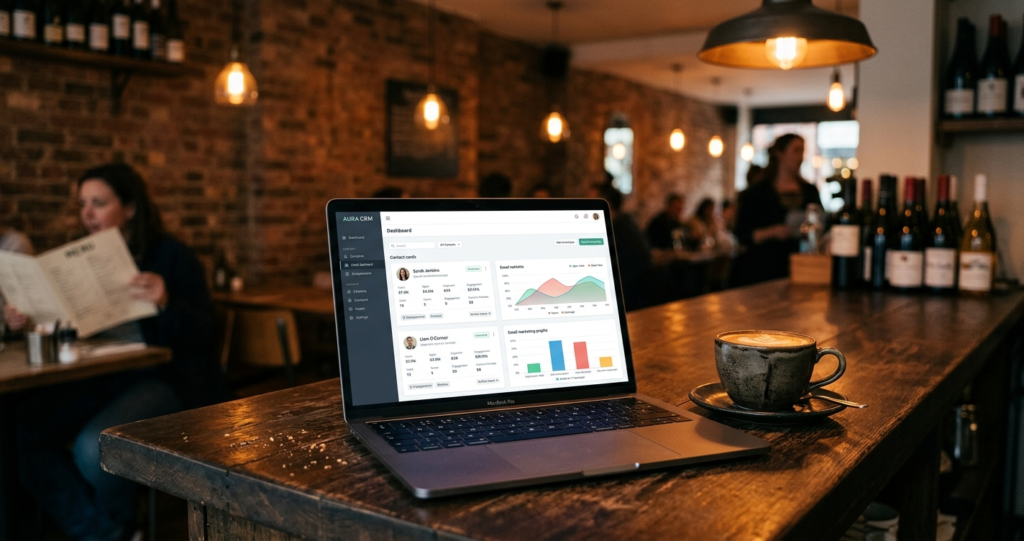
Running a restaurant means you already track a hundred things in your head. Your regulars’ usual orders. Who has a birthday coming up. Which tables fill fastest on a Friday. The question is whether HubSpot CRM actually helps you manage that information better, or just adds another tool to your already crowded stack.
We looked at HubSpot from the perspective of a restaurant or cafe operator, not a marketing agency or SaaS company. Here is an honest breakdown.
What Is HubSpot CRM?
HubSpot is a customer relationship management platform that centralises your contacts, communications, and marketing tools in one place. Originally built for sales and marketing teams, it has since expanded into a full business platform covering service, operations, and content management.
For the restaurant industry, it sits in a specific lane: it is not a reservation system, it is not a POS, and it does not replace your scheduling software. What it does is manage relationships with your customers at scale, automate follow-up communications, and give you a cleaner picture of who your repeat guests are.
HubSpot Pricing: What You Actually Pay
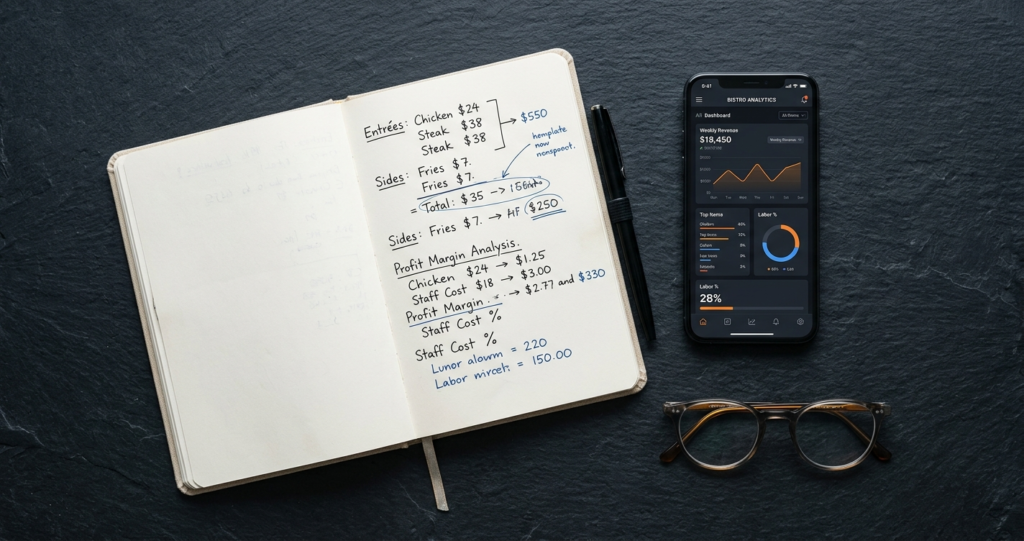
This is where most reviews gloss over the details. Here is the real breakdown.
Free Plan: HubSpot’s free CRM is genuinely free, forever. You get unlimited contacts, basic email marketing, deal tracking, and live chat tools. For a single-location restaurant just getting started with customer data, this is a legitimate starting point.
Starter Customer Platform: Starts at $15 per seat per month (billed annually). This adds marketing automation, removes HubSpot branding from emails, and gives you 1:1 technical support. You are limited to two pipelines at this tier, which matters if you are managing catering leads separately from your general customer base.
Professional: $90 per seat per month, billed annually, plus a compulsory one-time onboarding fee of $1,500. This is where full automation, A/B testing, and advanced reporting unlock. For most independent operators, this tier is overkill.
Enterprise: $150 per seat per month with a $3,500 onboarding fee. Built for large chains and franchise groups.
The honest take: The free plan is strong enough to test whether HubSpot fits your workflow. The jump from Starter to Professional is steep, both in price and in the onboarding fee. Most single-location operators will live comfortably at the free or Starter tier for the first year.
What HubSpot Does Well for F&B Operators
1. Unlimited Contact Storage with Detailed Guest Profiles
HubSpot lets you store unlimited customer profiles on the free plan. For restaurants, this means you can log dining preferences, visit history, dietary restrictions, and special occasions like birthdays and anniversaries. Every time someone books a table, fills out a form on your website, or signs up for your newsletter, that data flows into one place.
According to industry research, 80% of restaurant revenue comes from 20% of repeat customers. Knowing who those 20% are and what they want is the core use case HubSpot solves.
2. Email Marketing Automation Built In
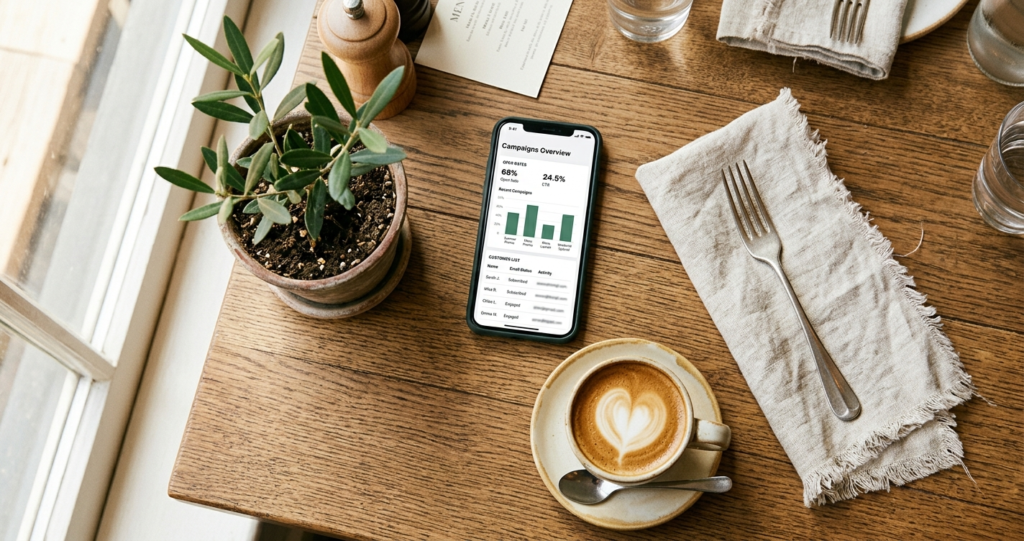
Rather than paying separately for Mailchimp or another email tool, HubSpot’s email marketing is built directly into the same system as your contact database. You can set up automated sequences for things like:
- A welcome email when someone signs up for your loyalty list
- A birthday offer 7 days before a guest’s birthday
- A re-engagement email for customers who have not visited in 60 days
- A post-visit thank-you for first-time guests
These workflows run without any manual input once you set them up. For a time-constrained operator, that matters.
3. Integrations with Key F&B Tools
HubSpot connects with over 2,000 third-party apps. For restaurants specifically, this means you can sync data from your POS system, reservation platforms like OpenTable, and online ordering tools. The integrations centralise customer data that would otherwise live in three different dashboards.
4. Breeze AI Tools
HubSpot’s AI assistant, now called Breeze, is integrated across the platform. It can summarise contact histories, flag missing data, generate email copy, and populate contact and company details automatically. For operators who are not natural marketers, Breeze reduces the friction of actually using the tool.
5. A Genuinely Useful Free Plan
Most CRMs offer a free trial. HubSpot offers a free plan that does not expire. The free tier includes contact management, email marketing, live chat, basic reporting, and deal tracking. Real businesses have run their entire customer management on the free plan. If you are unsure, you can test this for months before spending anything.
Where HubSpot Falls Short for Restaurants
1. Not Built for Restaurants
HubSpot was built for sales and marketing teams in general business contexts. There is no native reservation management, no table assignment, no kitchen communication, and no POS integration out of the box. You can build these connections through third-party integrations, but you are doing custom setup work that a restaurant-specific tool like SevenRooms or Toast handles automatically.
2. The Pricing Jump Is Steep
The free plan is generous. But the moment you need more than two pipelines, email sequences, or duplicate contact management, you hit the wall of the Starter plan. And if you need proper automation and A/B testing, you are looking at the Professional tier at $90 per seat per month plus a $1,500 onboarding fee. For a small cafe, that is a hard number to justify without clear ROI data.
3. Setup Takes Time
HubSpot is not plug-and-play for restaurant operations. You need to configure your pipelines, build your automation workflows, connect your integrations, and train your front-of-house team on how to log information correctly. One independent review rated HubSpot 3.3 out of 5 specifically for restaurant suitability, noting that while the marketing automation is excellent, the learning curve is real.
4. Reporting Has Gaps
Multiple reviewers on Capterra and G2 flag reporting limitations as a consistent frustration, particularly around real-time views and some custom dashboard configurations. For operators who want granular data on which promotions are driving covers, this can become a limitation at lower plan tiers.
Who HubSpot CRM Is Actually Right For
Good fit:
- Multi-location restaurant groups that need a centralised guest database across sites
- Operators already running email marketing who want to bring everything into one platform
- Cafes and restaurants with an active loyalty or membership program
- Tech-forward operators comfortable with a setup investment upfront
Not the right fit:
- Single-location spots that mainly need a reservation and table management system
- Operators who want something restaurant-specific out of the box with no custom setup
- Small businesses where the Starter-to-Professional pricing gap is a barrier
HubSpot vs Restaurant-Specific CRMs
The main alternative question operators ask is whether to use HubSpot or a tool built specifically for restaurants like SevenRooms, Eat App, or Lightspeed’s CRM tools.
The trade-off is straightforward. Restaurant-specific tools are faster to set up and come with native reservation and table management. HubSpot gives you more powerful marketing automation and a more flexible contact database, but you build the restaurant layer yourself through integrations.
If your primary need is guest relationship management and email marketing, HubSpot wins on raw capability. If you need front-of-house operations management alongside CRM, a restaurant-specific tool is likely a better starting point.
The Verdict
HubSpot CRM is a genuinely powerful tool and the free plan is one of the best in any software category. For restaurant and cafe operators, it works best as a marketing and guest relationship engine, not as an all-in-one operations platform.
Start with the free plan. Test whether your team actually logs guest data consistently. Build one or two email automation sequences and see whether they drive repeat visits. If the ROI becomes clear after 60 to 90 days, the Starter plan at $15 per seat per month is a reasonable next step.
Do not start with Professional. The $1,500 onboarding fee assumes you already know what you are doing with the platform.
Bottom line for F&B operators: HubSpot is worth testing on the free plan if guest retention and email marketing are priorities. It is not a replacement for your reservation system or POS. Use it for what it is good at.